

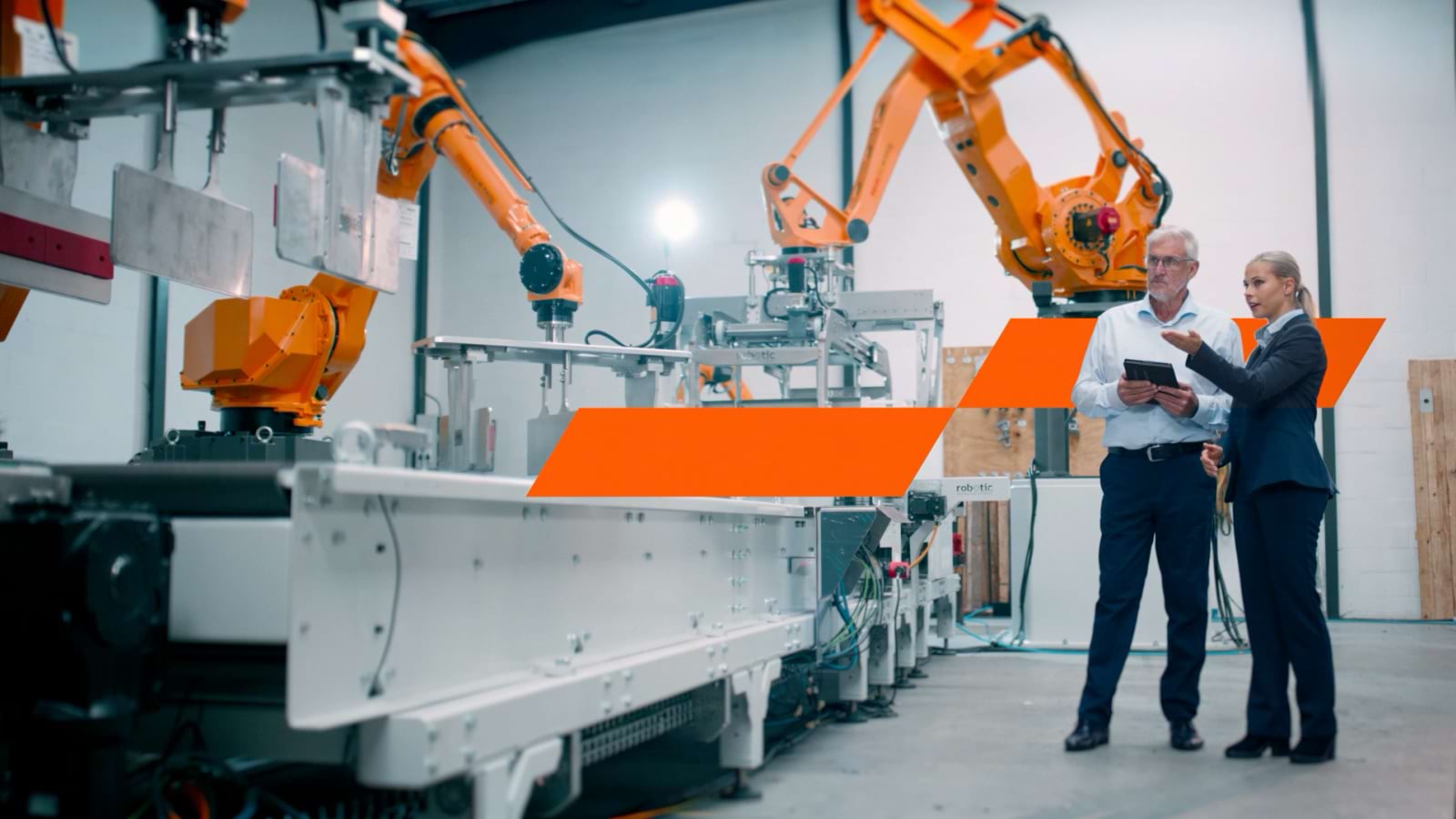
It’s often said that successful CEOs need both a microscope and a telescope to help them identify near-term threats while spotting long-term opportunities. This tension across time horizons is a recurring theme in PwC’s 29th CEO survey, based on responses from 4,454 chief executives across 95 countries and territories including Ireland.
In close focus, Irish CEOs are worried about a range of threats, including macro-economic volatility, technological disruption, and geopolitical conflict. At the same time, forward-looking CEOs are focusing on multi-year opportunities to reinvent their organisations for growth. They are forging ahead with investment in AI even though immediate returns are often elusive. They are prioritising innovation, and many are entering new sectors as they lean into a reconfiguration of industries that is reshaping the global economy.
Among key findings from this year’s survey:
Most Irish CEOs say their organisations are not yet seeing a return from investment in AI. While 17% report increased revenue from AI in the last 12 months and a quarter (23%) report lower costs, most say they have not realised revenue (79%) or cost (65%) benefits.
Irish CEOs are seeking growth opportunities outside their sector. Almost half (47%) say their organisations have started to compete in new sectors in the last five years, up from 32% last year and higher than the global average of 42%.
Compared to last year, Irish CEOs are less confident about their company’s near-term revenue growth prospects. Only 26% are very or extremely confident about revenue growth over the next 12 months, down from 43% in last year’s survey.
Just under a quarter (23%) of Irish CEOs say tariffs will reduce their company’s net profit margin over the next 12 months. Over two-thirds (67%) expect little to no change.
Stakeholder trust concerns have arisen in several areas of business operations over the last 12 months. The leading concerns reported by Irish CEOs include the impact of climate change on performance (30%), concerns around AI safety or Responsible AI (28%), and increased scrutiny of business decisions (26%).
Navigating in such a complex environment places a premium on leadership agility, including the ability to move rapidly between issues, opportunities, and time horizons. Irish CEOs say they spend over half (58%, Global: 47%) of their time looking through the microscope, at issues with a time horizon of less than one year — almost six times more than they dedicate to activities with a horizon of more than five years (10%, Global: 16%). Are they striking the right balance? It's a question CEOs should ask themselves as they strive to build organisations to thrive both today and tomorrow.
Select your industry for key data and takeaways
54%
of workers across all industries have used AI in the last 12 months.
14%
of employees are using GenAI tools daily at work.
Want the highlights?
Watch PwC’s Amy Ball—Reinvention Leader – discuss key findings from this year’s CEO Survey, featuring insights on AI adoption and innovating in the face of uncertainty
PwC’s 29th Global CEO Survey
46%
of consumer markets (CM) workers say they’ve found a meaningful career. Among all workers, 56% say the same.
52%
of CM workers say their manager supports them in building new skills. That’s lower than the 57% of workers across all industries who say the same.
What do our findings mean for you?
Hear from John O’Loughlin—Retail and Consumer Leader—on how consumer markets companies can approach and capitalise on shifting customer preferences and unmet needs.
Consumer markets: John O’Loughlin
56%
of energy, utilities, and resources (EUR) employees say they believe in their organisation’s long-term goals and objectives.
37%
of EUR employees expect climate change to affect their job in the next three years—more than the average of workers across all industries.
What do our findings mean for you?
Hear from Kim McClenaghan—Energy & Renewables Partner—on how EUR companies can meet the growing demand for low-cost, always-available, reliable energy, even as they manage geopolitical risks and plan for the transition to more renewable power.
Energy, utilities and resources: Kim McClenaghan
50%
of financial services (FS) workers are confident that AI will increase their job security over the next three years. Just 38% of workers across all industries said the same.
62%
of FS workers have learned new skills at work in the last year that are helping their career—6% higher than the global average.
What do our findings mean for you?
Mary Ruane—Asset and Wealth Management Leader—says financial services firms must emulate fintechs and build agility into their thinking and processes.
Financial services: Mary Ruane
29%
of private equity (PE) workers who’ve used AI on the job in the past year are using it daily at work—that’s more than twice the global average.
78%
of PE workers feel satisfied at work several times a week, compared with 64% across all industries. They’re also more inspired and excited, and less fatigued.
What do our findings mean for you?
Hear Mark McEnroe—Private Consulting & Deals Advisory Partner—explain how firms can move faster in implementing AI and apply innovation to different parts of their business.
Private equity: Mark McEnroe
35%
of technology, media, and telecommunications (TMT) employees who have used AI in the last 12 months use GenAI tools daily at work. Globally, 25% of workers report they’ve used AI in the last year.
54%
of TMT workers are confident that they’ll be able to control how technology will affect their work in the next three years. Just 40% of workers across all industries say the same.
What do our findings mean for you?
Amy Ball—Reinvention and Technology, Media and Telecommunications Leader shares how agentic AI can help some companies catch up in their tech implementation.
Technology, media and telecom: Amy Ball
The opportunity horizon
AI at enterprise scale
When we asked CEOs to pick the question that concerns them most these days, there was a clear winner: Are we transforming our business fast enough to keep up with technology, including AI?
While many organisations have achieved productivity gains that haven’t yet converted into financial metrics, almost a fifth of Irish CEOs (17%) say their company has realised additional revenue from AI adoption over the last 12 months, lower than the global figure of 29%. On costs, 23% of Irish CEOs say costs have decreased due to AI (Global: 26%), while 10% say costs have increased (Global: 21%). Still, most say their company has realised neither higher revenues (Ireland: 79%, Global: 65%) nor lower costs (Ireland: 65%, Global: 49%) from AI.
Our recent AI Agent Survey also found benefits for organisations deploying agentic AI. Over half (53%) of Irish participants reported productivity gains from AI agents while 38% report costs reductions.
Ireland is at the early stages of the AI era. Asked about the extent to which AI is being used across their business, Irish CEOs say it has been applied to a large or very large extent in demand generation (13%, Global: 22%), support services (11%, Global: 20%), their company’s products, services and experiences (9%, Global: 19%), direction-setting (4%, Global: 15%), and demand fulfilment (2%, Global: 13%). Consider also that in PwC’s Workforce Hopes and Fears Survey 2025, only 10% of Irish workers said they were using AI tools daily (Global: 14%).
The chart below shows Global data.
“AI is the catalyst for the next wave of business reinvention. It’s not about incremental gains — it’s about reimagining how value is created and delivered at scale.”
David Lee
Chief Technology Officer, PwC Ireland
Your next move: Adopt an enterprise-wide AI strategy. Our work with clients confirms that while isolated, tactical AI projects are valuable for building trust and capability, on their own they rarely deliver enterprise-wide, measurable value. Tangible returns typically come from scaling and integrating AI in line with the company’s business strategy. This, in turn, demands sustained AI adoption, supported by strong foundations and organisational structures that keep pace with rapid technology change — including a modern technology environment for AI integration, a clearly defined roadmap for AI initiatives, formal Responsible AI and risk processes, and operating model supports alongside an organisational culture that enables AI adoption.
Data from this year’s survey shows that organisations in the vanguard — those achieving both additional revenues and lower costs from AI — are furthest ahead in building these foundations. They are also deploying AI more deeply across different areas of the business. For example, 44% of those in the global vanguard have applied AI to the company’s products, services and experiences, compared to only 17% for other organisations. (Throughout this report, our analysis is adjusted for sector, company size, geography and other extraneous factors.)
Many Irish companies still lack AI foundations, such as clearly defined road maps and sufficient levels of investment
Q. To what extent do you agree or disagree with the following statements relating to AI use at your company?
Base: Respondents who have applied AI to at least a limited extent in one or more area of the business.
Most Irish organisations have not applied AI extensively
Q. To what extent has AI been applied in the following areas of your business?
Sectors without borders
AI is not the only powerful force reshaping global business. The collision of technology, climate change, geopolitics, and other megatrends is creating new customer needs and preferences, enabling new business models, and blurring the boundaries between industries. Many organisations are already venturing across sector and industry boundaries in pursuit of reinvention and growth.
Almost half of Irish CEOs (47%, Global: 42%) say that their company has started to compete in new sectors in the last five years, up from 32% last year. Among those global CEOs planning to make at least one major acquisition in the next three years, a similar proportion (44%) expects to make moves outside of their existing sector.
Asked which sectors outside their own they are seeking to grow their business, technology was identified by 14% of Irish CEOs (Global: 23%) and they, in turn, are seeking to grow in health services, business services, and banking and capital markets. The latter reflects continued encroachment by fintech firms into banking and payments, as well as efforts by large tech players to partner with or disrupt incumbent financial institutions.
Your next move: Reinvent to outperform. Data from this year’s survey shows a strong global association between a higher percentage of revenue coming from new sectors, higher profit margins, and greater CEO confidence in company growth prospects. In other words, playing an active role in industry reconfiguration is paying off. Organisations that want to seize the moment should look inwards at their own capabilities as well as outwards for opportunities. When it comes to M&A, for example, PwC research has found that acquisitions are more likely to add value if the focus is on acquiring complementary capabilities, as opposed to strengthening market power or acquiring customers. Beyond smart deal-making, playing across sector boundaries requires collaborating at scale with new ecosystem partners — a skill that many organisations need to hone. Collaboration at scale may also require investment in core systems. Consider the example of one manufacturer we are supporting, which has embarked on a major upgrade of its data environment and systems to enable interoperation with new value chain partners across the mobility ecosystem.
Globalisation in motion
A little over half (51%) of global CEOs are planning to make international investments in the year ahead. Among these, the US retains its position as the top destination, with more than a third (35%) of CEOs placing it in the top three countries that will receive the highest proportion of company investment. The UK and Germany (both 13%) and Mainland China (10%) remain popular choices. Among significant changes, 13% of global CEOs planning to make international investments placed India among their top three destinations, up from 7% in last year’s survey.
For Ireland — an outward-looking economy with strong international trade links — these global trends matter. Unsurprisingly, despite Brexit, the UK continues to dominate as the top destination for Irish CEOs, with 62% ranking it first. This is followed by the US (44%), Germany (23%), Spain (10%), Italy (10%) and India (8%). These choices reflect Ireland’s deep ties to the UK and US markets, while also signaling emerging interest in India as a growth opportunity. Irish businesses should consider how these shifts, including India’s rise globally, could influence their own international strategies and competitive positioning.
The UK and US are the most popular destinations for international investment
Q. Which three countries, excluding the Republic of Ireland, will receive the greatest proportion of your company’s overall investment in the next 12 months?
Base: All respondents planning international investments in the next 12 months.
Your next move: Follow capital flows. Our survey paints a picture of globalisation in transition — not in retreat. While this view is incomplete (our data does not capture scale of planned company investments or speak to long-term capital deployment by banks and other financial institutions) it underscores how new value pools are being created as the global economy reconfigures. We recommend that organisations consider tracking global investment flows as a core consideration of their strategic planning process, if they don’t already do so. CEOs should also take the opportunity to look at the big picture of their own cross-border activities, and what it reveals about the opportunities they are (and are not) pursuing.
Feeling the chill
Confidence down, threats up
Uncertainty is on the rise. Compared to last year’s CEO Survey, leaders are significantly less bullish about the revenue growth outlook for their organisations over the next 12 months. One-quarter (26%) of Irish CEOs are now extremely or very confident for the year ahead, down from 43% in 2025. Likewise, the three-year revenue growth outlook has also declined for this group, down to 31% from 49% in 2025. An increasing number are “moderately confident”, however: 49% for the next 12 months (2025: 37%) and 60% for the next three years (2025: 39%).
What explains this shift? While CEOs remain generally optimistic about the growth prospects for the global economy (Ireland: 54%, Global: 61%), Irish CEOs remain confident about local economic growth (63%, albeit down from 74% in 2025). Short-term industry cycles are also at work. For example, lower confidence among insurance CEOs globally needs to be viewed in the context of a golden period for industry profitability that is now coming to an end.
Beyond sector-specific dynamics, Irish CEOs have concerns about a range of near-term threats, including macroeconomic volatility (27%, Global: 31%), technological disruption (21%, Global: 24%), and geopolitical conflict (21%, Global: 24%). Almost one fifth (18%) say their company is highly or extremely exposed to inflation and challenges associated with the availability of key skills.
Uncertainty relating to tariffs is a new consideration. Just under a quarter of Irish CEOs (Global: 29%) say tariffs will reduce their company’s net profit margin in the year ahead, against 67% expecting little to no change (Global: 60%), and 2% anticipating margin improvement (Global: 6%). Among those expecting margin compression due to tariffs, most global CEOs anticipate that net profit margin will decline by less than 15%. In a world of lower confidence and elevated threats, it comes as no surprise that many CEOs are less inclined to make big moves. A third (Ireland: 29%, Global: 32%) say they are less likely to make large new investments due to geopolitical uncertainty.
Globally, concern about cyber threats is rising sharply. Almost a third of global CEOs (31%) say their company is highly or extremely exposed to the risk of a significant financial loss from cyber threats in the year ahead — up from 24% last year and 21% two years ago. Cyber now ranks alongside macroeconomic volatility as the threat to which most CEOs say their company is exposed. In markets like Germany and the UK, this concern is even more pronounced, reflecting heightened awareness of the evolving threat landscape.
By contrast, improving enterprise-wide cybersecurity is the number one action Irish CEOs are taking to a large or very large extent (44%). And almost all Irish CEOs (82%, Global: 84%) say they plan to strengthen cybersecurity as part of their response to geopolitical risk, suggesting significant investment and planning may already be underway.
However, given the pace and sophistication of cyber threats, confidence should not lead to complacency. Irish organisations need to ensure their cybersecurity strategies remain agile and continuously evolve to match the changing risk environment.
CEO confidence in short-term company growth has moderated
Q. How confident are you about your company’s prospects for revenue growth? (Showing only “Very confident” and “Extremely confident” responses)
One in five CEOs expect the global economy to contract in the year ahead
Q. What do you believe economic growth (i.e. gross domestic product) will be over the next 12 months in the global economy?
Irish CEOs feel exposed to macroeconomic volatility, technological disruption and geopolitical conflict
Q. How exposed do you believe your company will be to the following key threats in the next 12 months? (Showing only “Highly exposed” and “Extremely exposed” responses)
(Showing only “Highly exposed” and “Extremely exposed” responses)
Note: Where no data is included, the specified threat had not been included as a response option in that particular year.
One in four Irish CEOs expect tariffs to decrease profit margins, with most expecting little to no change
Q. Over the next 12 months, what will be the relative impact of tariffs on your company’s net profit margin?
“Disruption is inevitable, but innovation and resilience are how we shape what comes next. The organisations that thrive will be those that turn uncertainty into progress, using technology and insight to solve problems and create new possibilities.”
Ciarán Kelly
Risk & Regulation Leader, PwC Ireland
Your next move: Calibrate your concerns. Uncertainty is always present. The question facing CEOs is how to avoid becoming frozen in a world where dynamism pays. Data from this year’s survey shows that organisations planning to make major acquisitions and other large investments — despite the uncertain environment — are growing more rapidly and enjoying higher profit margins. A second key question facing leaders is whether their perceptions and plans are based on the best available intelligence. As in previous CEO surveys, we find it striking that threat perceptions can vary greatly even among neighbours. For example, more than a third of CEOs in Germany (35%) say their company is highly or extremely exposed to cyber risks in the year ahead, compared to only 16% among UK CEOs — even though UK and Irish organisations continue to experience regular, high-profile cyberattacks. In Ireland, our Digital Trust Insight Survey shows that the top three threats for Irish organisations are cloud, connected product attacks, and third-party breaches.
Moving into 2026, CEOs everywhere should take the opportunity to revisit their assumptions and calibrate with peers across borders. Indeed, the Digital Trust Insight Survey shows that many Irish organisations are doing just that. 38% are re-evaluating and relocating critical infrastructure, 35% are reconsidering where core operations are based, 32% are adapting trade and operating policies to manage risk more effectively, and 41% are updating cyber insurance to improve coverage and resilience.
The road to reinvention
Innovate to reinvent
When we asked CEOs to pick the question that concerns them most these days, in second place (after technology and AI) was reinvention: Am I doing enough to ensure my company’s viability into the medium- to long-term?
Yet when it comes to embedding innovation into business strategy, the gap between Ireland and the rest of the world is striking.
“If strategy isn’t evolving, it’s eroding. In periods of seismic change, failing to reinvent the business and operating model is the fastest route to irrelevance.”
Amy Ball
Reinvention Leader, PwC Ireland
Globally, half of CEOs say innovation is central to their company’s strategy to a large or very large extent. In Ireland, that figure is just 32%.
This begs the question: are Irish CEOs doing enough to cultivate a culture of innovation that will secure long-term competitiveness? In a world where reinvention is critical, Irish businesses need to accelerate and institutionalise innovation as a core driver of growth and resilience.
When asked about specific practices that support innovation, however, we see a clear gap between aspiration and reality — and between Ireland and the rest of the world. Only 14% of Irish CEOs agree to a large or very large extent that their company tolerates high-risk innovation projects (Global: 25%), while just 9% have routine processes in place to stop underperforming R&D projects (Global: 24%) and 5% have a defined innovation centre, incubator, or corporate venturing division (Global: 23%).
Half of Irish CEOs say innovation is critical to business strategy, but few have implemented proven innovation practices
Q. To what extent do each of the following statements characterise your company’s approach to innovation?
Your next move: Build innovation capability. CEOs need to guard against what management writer Steve Blank calls innovation theatre — activities that resemble innovation but produce no tangible value. The practices we asked about in this year’s survey are not a foolproof recipe for innovation success. But they are a good starting point for frank discussions among CEOs, their top teams, and boards about whether innovation is more than a rhetorical priority. This year’s global survey data shows that organisations employing a critical mass of innovation practices are achieving not only a higher percentage of sales from new products and services (as you might expect) but also faster overall revenue growth and higher profit margins.
From climate risk to climate value
More than four in ten Irish CEOs (44%, Global: 42%) say their company is at least moderately exposed to the risk of a significant financial loss arising from climate change in the year ahead. Yet few organisations systematically take climate risks and opportunities into account in their decision-making across the business. A minority of Irish CEOs agree to a large or very large extent that their company has defined processes for bringing climate into business decisions relating to supply chain and sourcing (21%, Global: 25%), and product design and development (28%, Global: 24%). For capital allocation decisions, including M&A, this stands at one in four (25%, Global: 20%).
“Sustainability is no longer about reporting; it’s about resilience and growth. Leaders who integrate sustainability into decision-making will unlock new sources of competitive advantage.”

David McGee
Sustainability Leader, PwC Ireland
Most Irish companies don’t have strong processes for bringing climate opportunities and risks into business decision-making
Q. To what extent does your company have defined processes that account for the opportunities and risks associated with climate change in the following areas?
Your next move: Integrate climate change into decision-making. A by-product of new sustainability reporting requirements is that many organisations have expanded their stores of sustainability data that can be fed into decision-making processes. With better data at hand, these organisations have an opportunity to move from a risk management mindset to active value creation. While every company has a unique set of sustainability factors that influence its ability to create value, our experience working with clients points to five interconnected topics that drive value creation for most: physical climate risk, regulation, energy strategy, supply chains, and tax credits and incentives. In addition, our survey data shows that organisations with defined processes for bringing climate risks and opportunities into decisions are more agile when it comes to adapting to changing demand or supply conditions.
Compete on trust
Stakeholder trust has never been easier to lose. Cyberattacks. Unpredictable geopolitics. Rising expectations for transparency. Rapidly shifting attitudes on sustainability. Then there is AI, a cause for excitement and anxiety in equal measure among investors, customers, and employees. In our latest workforce survey, a quarter (25%) of Irish employees said they were worried about AI’s impact on their work. A single misstep on any of these issues can precipitate a cascade of stakeholder concerns with damaging consequences for trust and value.
Stakeholder trust can be built and protected through deliberate investment in data, processes, and controls. For Irish businesses, this is critical given the trust concerns CEOs reported in the past year: AI safety (Ireland: 28%, Global: 37%), data privacy (Ireland: 14%, Global: 38%), transparency (Ireland: 18%, Global: 38%), and the impact of climate change on business performance (Ireland: 30%, Global: 32%). The Irish figures are consistently below global levels, which may suggest lower perceived risk — but the consequences of getting trust wrong are significant.
Our survey shows that globally, organisations experiencing the fewest trust concerns delivered total shareholder returns over a 12-month period on average nine percentage points higher than those facing the most concerns. And Irish organisations are responding, not least in cyber risk: according to PwC’s Digital Trust Insights Survey, 57% of Irish businesses plan to increase investment in cyber risk management amid global tensions, and 41% are updating cyber insurance to improve resilience.
Irish CEOs must understand that trust isn’t just a compliance issue, it’s a driver of value — one that will create competitive advantage in a market where trust increasingly determines success.
“In today's fast-paced world, trust isn't just a nice-to-have; it's the bedrock of sustained impact. Stakeholder trust can be built and protected through deliberate investment in data, processes, and controls.”

Fidelma Boyce
Trust Leader, PwC Ireland
Many Irish companies experienced stakeholder trust concerns in the last 12 months
Q. In the past 12 months, to what extent has your company experienced any of the following trust concerns from your key stakeholder groups (e.g. the board, customers, regulators, investors, employees)?
(Showing aggregate of “To a moderate extent”, “To a large extent”, and “To a very large extent” responses)
Your next move: Make trust a boardroom topic. While it is impossible to fully inoculate a company against losses of stakeholder trust, CEOs must anticipate and proactively address potential areas of vulnerability. As our analysis demonstrates, trust is not a ‘soft’ topic. Value is at stake. Trust therefore should be prioritised as a boardroom topic and considered across three interlocking dimensions: operational trust (built on efficient, resilient operations); accountability trust (resting on high-quality reporting and communications); and digital trust (based on systems and processes that protect sensitive data, maintain secure operations, and enable digital tools to be used responsibly and ethically).
Stakeholder trust can be built and protected through deliberate investment in data, processes, and controls. To take one digital trust example, Responsible AI programmes build trust and create value by reducing AI-related incidents and enabling organisations to recover value more quickly after adverse events. Notably, Irish organisations report low trust in AI agents — only 7% express high trust across multiple functions — highlighting a key area for strategic improvement. Investing in strong governance, transparency, and ethical standards is essential to bridge this trust gap and fully realise the potential of AI for Irish businesses.
Conquer the tyranny of the urgent
As a CEO, how you invest your time is one of the most important decisions you can make, especially how you divide your attention between issues that will play out over the short-, medium- and long-term.
There are intriguing differences across countries and regions. Mainland China CEOs spend significantly more time than the global average on horizons of one year to less than five years (49%, Global: 37%) and five years or more (28%, Global: 16%). US and European CEOs tend to spend more time than the global average on short-term activities, albeit with some differences between countries.
As you might expect, global CEOs of private equity-backed organisations spend most time on short-term issues (57%), consistent with PE investors’ focus on realising value over target holding periods of three to five years. Perhaps surprisingly, however, other global private company CEOs also spend more time on short-term matters than their public company peers (51% versus 39%).
At a local level, Irish CEOs say that 58% of their time is dedicated to activities with time horizons of less than one year (Global: 47%). A little under a third of their time (32%, Global: 37%) is spent on activities with one- to five-year horizons, and the remainder (10%, Global: 16%) on activities with horizons of more than five years.
This imbalance suggests Irish CEOs will need to reinvent their approach — shifting time toward long-term strategy and innovation to secure future competitiveness.
Irish CEOs devote more than half of their time to short-term issues
Q. What proportion of your typical schedule is dedicated to activities associated with the following time horizons?
Your next move: Reinvent your calendar. It’s impossible to generalise about the ideal allocation of CEO time across horizons. In crisis situations, for example, leaders may need to devote their full attention to here and now. But many (perhaps most) CEOs we know struggle with “the tyranny of the urgent” — spending too much time looking through their proverbial microscope when they know they should be focusing more attention on the long-term viability of the business. Indeed, counterintuitively, CEOs who say the company’s mid- to long-term viability is one of the most pressing questions they face also say they spend more time than others on activities associated with time horizons of less than a year. If these leaders are serious about reinvention, they must reinvent how they invest their time.
Dynamism or denial?
Organisations cannot excel at everything. The challenge facing Irish CEOs at this moment is to decide, in conjunction with their top team and board, how the company’s value creation recipe needs to change for the decade of innovation and industry reconfiguration ahead. While there is no single right answer — nobody can know for sure what the global economy will look like in 10 years — perhaps the biggest danger is denial.
For Ireland, this imperative is even more pressing. Our economy’s reliance on foreign direct investment and the uncertainty that continues to surround global trade and geopolitics mean Irish businesses cannot afford to focus narrowly on short-term activities. Reinvention and innovation must move to the top of the agenda — not as optional initiatives, but as essential strategies for long-term viability and competitiveness.
Throughout this year’s CEO Survey, we see evidence that organisations moving furthest, fastest to reinvent their business and operating model are outpacing less-dynamic peers. To recap:
Organisations have realised cost savings (Ireland: 23%, Global: 26%) and generated additional revenues (Ireland: 17%, Global: 29%) from AI over the last year. How? By putting strong foundations in place and applying AI more deeply to more areas of the business, including to the company’s own products, services, and experiences.
Almost half (Ireland: 47%, Global: 42%) have begun competing in new sectors or industries in the last five years. Those generating a higher percentage of revenue from new sectors are more profitable and have CEOs with greater confidence in the company’s growth prospects.
On the flip side, consider the 28% of Irish organisations (Global: 32%) whose CEOs say they are less likely to make large new investments due to geopolitical uncertainty and are not planning major acquisitions. These “frozen” organisations are growing more slowly and have lower profit margins than their peers.
Leaders are right to pay close attention to the very real threats to company performance in the year ahead posed by geopolitical conflict, cyber risks, economic volatility, and other factors. But near-term threats cannot be allowed to dominate the top management attention at a time when long-term forces are reshaping how value is created — and need attention now.
Focusing on short-term challenges could leave Irish organisations vulnerable in the decade ahead. Reinvention and innovation must therefore become central to strategy today if Irish CEOs want to secure sustainable growth and competitiveness.
Authors



Contributors
Enda McDonagh
Managing Partner , PwC Ireland (Republic of)
Fidelma Boyce
Assurance Partner , PwC Ireland (Republic of)
Ciarán Kelly
Risk and Regulation Leader , PwC Ireland (Republic of)
David McGee
ESG Leader , PwC Ireland (Republic of)
Kim McClenaghan
Partner , PwC Ireland (Republic of)
Mark McEnroe
Partner , PwC Ireland (Republic of)
John O'Loughlin
Partner , PwC Ireland (Republic of)
Mary Ruane
Partner , PwC Ireland (Republic of)
Survey methodology and notes


Business Reinvention
Geared for unstoppable reinvention.
Artificial Intelligence
Drive growth. Enhance processes. Remain agile.


Menu